Climate Resilience is the process of preparing communities to adapt and thrive in the face of climate change impacts such as severe flooding, extreme heat and increased ice storms. The Department of Sustainability and Resilience aims to improve understanding and enhance Worcester’s capacity to withstand and recover from these challenges in collaboration with other municipal departments and the community.
Discover Worcester's journey toward climate resilience with our engaging, interactive StoryMap. Dive into our detailed plans, studies and the City's past, present and future efforts. Explore Climate Resilience in Worcester
Discover careers in urban forestry, green infrastructure, and nature-based solutions in this short film featuring local professionals working in the greater Worcester area. Watch Worcester Green Jobs.
Urban Flooding Resilience
Revitalizing Worcester's Rain Gardens
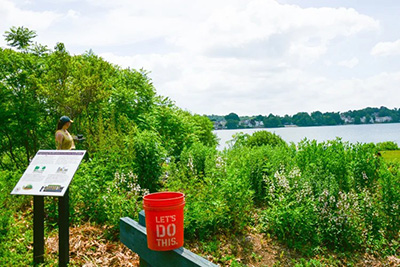
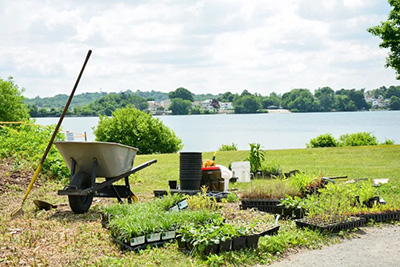
The City is investing in the long-term health of its eight rain gardens – landscaped sites on municipal and school properties that soak up rainwater, ease flooding, and filter out pollution before it reaches our waterways. Also known as Green Stormwater Infrastructure, these gardens use plants and soil to manage stormwater naturally, while bringing more greenery, beauty, and wildlife habitat into our neighborhoods. The Department of Sustainability & Resilience is leading the effort alongside Public Schools, Public Works, Parks, Recreation and Cemetery, and the Senior Center, working with a consultant team of BSC Group and Reimagined Roots, who began work in summer 2025 and will continue through 2028.
The project team started by assessing all eight sites – looking at plant health, drainage, maintenance needs, and where each garden could perform better – and used those findings to develop tailored improvement plans for each location. The work is happening in phases: some sites already show visible upgrades, while others will see bigger improvements over the next couple of years. This staged approach lets the team work with the seasons, each site's unique needs, and the realities of caring for living landscapes, so some results are immediate while others will grow more visible over time.
Beyond physical upgrades, these eight gardens are also a testing ground for how Worcester cares for rain gardens long-term – informing more practical, sustainable approaches to designing and maintaining them citywide. Community partnerships have been central to that mission: Senior Center volunteers, the Worcester Native Plant Initiative, and Worcester Technical High School have all pitched in on co-created designs, hands-on planting days, and educational programming. At Shore Park in particular, these partnerships have turned rain garden improvements into a hub for public engagement and learning.
Check out some photos from our contractor, Reimagined Roots, of three of our rain garden sites, Community Landscape Regeneration - Reimagined Roots.
Sustainable Yard Designs – Lessons for Property Owners
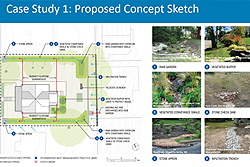
As part of a special City initiative, we chose four properties for a unique opportunity to have landscape design experts craft personalized, conceptual plans to create a more sustainable and resilient yard. These "Sustainable Yard Designs" feature elements such as rain gardens, re-routing roof gutters, reducing pavement, native plantings, pollinator gardens and more. We hope they will spur ideas you can use for your own yards!
Learn More and Be Inspired with Examples
- Review the four case studies to learn about local examples of nature-based solutions to mitigate flooding and extreme heat:
- Our project consultant, Weston and Sampson, presented the Sustainable Yard Designs at the Green Worcester Summit (May 11, 2024) - check out the Presentation Slides to learn about local examples of nature-based solutions to mitigate flooding and extreme heat.
- Explore other sustainable yard features such as Rain Gardens, Pollinator Gardens and Edible Plants shared at the Green Worcester Summit (May 11, 2024).
A Municipal Plan to Mitigate Flooding in Worcester
City of Worcester Stormwater & Green Infrastructure Master Plan: A Plan to Mitigate Flooding in Worcester; Phase I
Between 2023–2025, the City developed a Stormwater & Green Infrastructure Master Plan to assess risks associated with urban flooding and build capacity to adapt to a changing climate. The report presents an overview of existing and anticipated future flooding in Worcester, the impacts of that flooding, development of the plan, and steps to create the model and evaluate green and gray alternatives for flood reduction.
Between 2025–2026, the City completed Phase 2 of this project through a second grant, advancing a citywide Integrated Flood Model that will serve as the primary tool for guiding future resilience decisions. This phase integrated and expanded existing stormwater, drainage, combined sewer, and waterway models into a comprehensive modeling framework, supported by in-depth data gathering – including stormwater and stream monitoring – and coordination with existing drainage system information. Phase 3, pending additional grant funding, will focus on model calibration and validation.
Beyond the technical analysis, conceptual plans were developed for small- and large-scale nature-based solutions (NBS), to be explored further in future phases. Community engagement was also central to this work, including stormwater education in four Worcester elementary schools led by the Blackstone River Watershed Association with DPW assistance, and a green jobs video featuring local professionals in the nature-based solutions field to educate and inspire students and the public.
Urban Heat Resilience
Miyawaki Forests
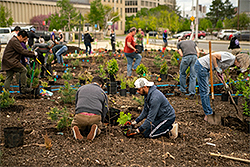
A 2023 state-funded Municipal Vulnerability Preparedness Grant assisted with the planting of the City's two pilot Miyawaki Forests - one adjacent to the Worcester Public Library in the McGrath Parking Lot and the second at the Plumley Village apartment complex. These forests were planted by hundreds of community volunteers in the Spring of 2024.
The Miyawaki Method is a unique approach to reforestation devised by Japanese botanist Akira Miyawaki that creates dense, biodiverse, native pocket forests. These fast-growing and resilient tiny forests offer numerous ecological and human health benefits including flooding reduction, cooling the "urban heat island," and boosting biodiversity.
Learn More
- Check out the Project StoryMap.
- Review Project Presentation Slides by Bio4Climate presented at the Green Worcester Summit on May 11, 2024.
- The City of Worcester's Miyawaki Forests: Background and Year One Recap 08/21/2025
- Miyawaki Forests Community Benefits of the Urban Wild - 08/21/2025
- Miyawaki Forests Ecological Functions of the Urban Wild - 08/26/2025
CoolPockets

The City received funding from the state to design two CoolPockets in Spring 2024. A CoolPocket is a public space that will provide shady nooks for neighbors to gather, relax and find respite from the heat caused by Worcester's dense urban landscape. CoolPockets can increase the City's climate resilience by providing shade, incorporating stormwater management techniques and increasing the number of plants in the City which offer health and carbon sequestration benefits.
The two locations selected, Vernon Hill Park and Columbus Park School, received conceptual-level designs with the community's ideas and support.
Status update: The City hired BSC Group in the late spring of 2025 to complete an engineering design for the Columbus Park School Cool Pocket, to be set up to pursue construction once funding has been identified.
Learn More
- Check out the Project StoryMap.
- Our project consultant, BSC Group presented about CoolPockets at the Green Worcester Summit (May 11, 2024) - Presentation Slides
Student Partnership
The City of Worcester is grateful to work with local students to further prepare for climate changes affecting our city.
- Urban Heat Resilience: “Interventions for Strengthening Resilience to Extreme Heat in Worcester, MA" by Julia Silverstone, 2025. Report | Poster
- Winter/Ice Storms Resilience: Winter Climate Adaptation Plan developed by WPI students. Slides | Full Report | Summary
Green Worcester Summit
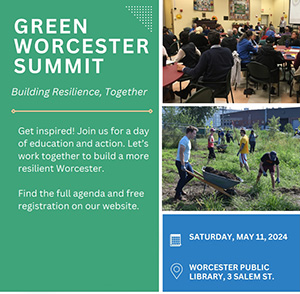
The City of Worcester hosted the Green Worcester Summit: Building Resilience, Together on May 11, 2024 at the Worcester Public Library.
- Miyawaki Forests: Restoring Nature Downtown
- Stormwater & Green Infrastructure Master Plan
- Sustainable Yards 101 - Pollinator Gardens
- Sustainable Yards 101 - Edible Plants
- Sustainable Yards 101 - Rain Gardens
- CoolPockets Come to Worcester
- Root Resilience: Worcester's Urban Forestry Master Plan
- Root Resilience: Forest Restoration
- Sustainable Yard Designs: Case Studies of Nature-Based Solutions
- Green Worcester Summit - Full Agenda
Green Worcester Summit: Building Resilience, Together
A video series from the Green Worcester Summit held on May 11, 2024.
Watch Now!
Contact Information
Address
Sustainability and Resilience
51 Sever Street Worcester, MA 01609
Mailing Address: 455 Main Street
Worcester, MA 01608
Contact
Phone: 508-799-8324
greenworcester@worcesterma.gov

Hours
By Appointment
Monday - Friday
8:30 a.m. - 5 p.m.