In 2022, the Worcester Police Department (WPD) underwent a Racial Equity Audit, conducted by the Center for Naval Analyses (CNA). The audit involved an external review of WPD's institutional norms, systems, policies, and practices and resulted in several recommendations on improvements to its Diversity, Equity, and Inclusion (DEI) efforts. The resulting report was published in March 2024. In many cases, CNA's recommendations had already been adopted or were in process of being adopted. Since that time, the WPD has instituted many more changes and improvements. The following is a full breakdown of the WPD's work related to the full list of CNA's recommendations, and new actions and outcomes will continue to be added.
Findings
Please click on a finding below to read related Recommendations and Outcomes.
Recommendation 1.1: The WPD, in collaboration with the City of Worcester and community members, should develop a robust and specific DEI plan.
Actions
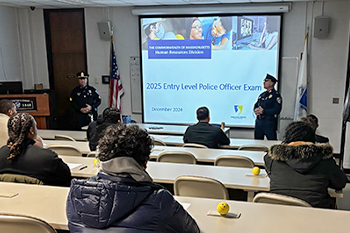
The WPD is working toward publishing a plan outlining its DEI efforts. Some actions that the department has already taken will be added to the plan along with recruitment strategies it will be implementing. Some of those strategies, with the assistance of the City Manager's Office, will include working to expand the residency requirement for officers and to increase the maximum age for the Massachusetts Police Civil Service entrance exam, from 32 years old to 39 years old.
The WPD is in the process of formulating a DEI policy in conjunction with the Executive Office of Diversity, Equity, and Inclusion (EODEI) and the department's Policy Review Committee. The policy will be available to the public online, and the public will be able to submit suggestions or comments by emailing wpdpolicyreviewcommittee@worcesterma.gov.
Some of the efforts that are already underway include information sessions and trainings. DEI Officers Sgt. Angel Miranda and Ofc. Casey Onuigbo, in conjunction with Human Resources, and Massachusetts Civil Service, are conducting information sessions for people interested in learning about the Massachusetts Police Civil Service process. The WPD has noticed that many people in under-represented groups are completely unaware of the Mass. Civil Service Process. Part of the department's DEI plan will be to identify these under-represented groups and collaborate with them to ensure they have access to the Civil Service process information.
Sgt. Miranda and Ofc. Onuigbo also led intradepartmental trainings, alongside the municipality's Chief Equity Officer, consisting of approximately 18 hours of DEI subject matter. This included two hours of anti-harassment training performed by the Lead Investigator of the EODEI. Going forward, the department will be performing an annual review of department policies to ensure they have a DEI lens.
Outcome
In collaboration with the EODEI, DEI officers, the Chief of Police, and the public, the WPD has begun putting together the building blocks of a DEI plan. The department still needs to draft the outline to establish a guideline that keeps the department in line with DEI efforts.
Recommendation 2.1: The WPD should consider adopting new feedback systems that enable more officers to contribute their insights regarding department policies, procedures and practices related to DEI.
Actions
The WPD has implemented an internal Policy Review Committee, which consists of a group of officers from various ranks, including Patrol Officers, Sergeants, and Lieutenants. The pool is diverse, with male and female officers that have various levels of experience on the job, backgrounds, upbringings, trainings, and unit assignments. The diversity of the committee membership allows for several channels of feedback within the department with all officers:
- Word of mouth through officers to members of the committee,
- Bureau of Professional Standards (BOPS) emails,
- Officer units relaying concerns through their chain of command,
- Contacting Union representatives, who are included on the Policy Review Committee,
- And contacting the EODEI or the Chief of Police, who both have an open-door policy.
The inclusion of officers and officials from various divisions allows for an array of perspectives to be expressed from the more than 400+ person WPD as well as the EODEI.
The committee meets monthly to review policies of interest that were brought to the committee's attention by other members of the department. Once information is gathered about a policy of interest, it is then assigned to a subgroup within the committee to research and analyze it to address the forwarded concerns. A draft policy is formulated and put through a workflow reviewed by members of the Policy Review Committee. Discussion is entered into the workflow and then evaluated to determine the best practice going forward. The policy is then submitted to the respective Deputy Chief and Chief for review.
Outcome
This newly adopted feedback system has created more opportunities for officers to provide feedback from every aspect of the department.
Recommendation 3.1: The WPD leadership should prioritize enhancing collaboration and communication with the HRC.
Actions
The WPD has established a monthly meeting with the Chair of the HRC, Chief Equity Officer of the EODEI, and Chief and Deputy Chief of the WPD Patrol Division. During this meeting, policies are discussed to allow for better understanding of recommendations to improve the policies.
Outcome
This collaboration allows both the HRC Chair and the WPD the opportunity to get informative insight for their next public meeting and develop a stronger working relationship. This greater understanding allows the police and the HRC/public to work collaboratively, minimize hindrances or bottlenecking, and promote diversity, equity, and inclusion. These meetings have promoted healthy discussions of recent policies such as the Sexual Assault Unit policy, Use of Force policy, LanguageLine policy, and Undercover Prostitution Operations.
Recommendation 4.1: The WPD should publicly recognize the findings of this audit's data analysis that identify disparities, and it should take steps to acknowledge past incidents involving communities of color.
Actions
The Chief of Police has been publicly discussing the findings of this audit with the City Council and the Standing Committee on Public Safety. During his tenure, the Chief has also publicly recognized past practices that entail institutional policing and harmed communities of color.
Outcome
- A department-wide understanding of what defines institutional policing.
- An annual review of policies and procedures performed by our DEI Unit to check for any procedure that may cause disparities.
- Trainings on implicit and explicit biases.
- An annual review of Policy 211 Bias Free Policing and Profiling.
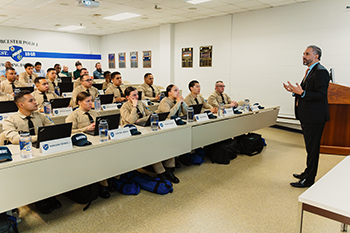
- The Addition of DEI Portion to the Police Academy, which includes the history of policing with a DEI lens. The Curriculum and Syllabus cover institutional practices that can impact communities of color.
Recommendation 5.1: The WPD should amend its recruitment plan to strategically increase diversity.
Actions

WPD is aware of the discrepancy in the department's demographics and is working toward establishing a recruitment plan. A few of the action steps include creating a DEI program for the new recruits, holding informational sessions about the Civil Service process, and high school and college job fairs.
Outcome
Action steps have been created to address specific areas. A comprehensive DEI plan is still being developed.
Recommendation 6.1: The WPD should amend its recruitment policy to articulate its commitment to actively diversifying its workforce through targeted outreach efforts.
Actions
The WPD is limited to candidates that are certified through the Massachusetts Department of Personnel Administration and passed the Civil Service Police Officer exam. The WPD is currently petitioning the City Council and Massachusetts Civil Service to increase the maximum age to take the Civil Service entrance exam from 32 to 39 years old, which would expand the recruitment pool. This initiative is presently part of Massachusetts House Bill H3929. On March 27,2025, it was referred to the House Committee on Public Service.
In that same month, the municipality successfully removed the Chief and Deputy Chiefs of Police from Civil Service. For the remaining positions, the municipality must use a pool of candidates that have passed the Civil Service Exam. If the entire department were removed from Civil Service, the WPD would review the recruitment policies of other departments relative to enhancing diversity to identify best practices and potential strategies to implement within the WPD. The WPD's own recruitment policy would then be revised. In addition, the WPD and the EODEI are collaboratively working to formulate a DEI mission/policy to reflect its commitment to actively diversify its workforce. This mission will state the importance and goal of a diverse workforce.
Outcome
Discussions about removing the WPD from Civil Service remain ongoing among the unions, Command Staff, and the municipality. Currently, WPD leadership and EODEI are engaging in ongoing conversation to identify values and goals of diversifying the workforce.
Recommendation 7.1: The City, in consultation with WPD's stakeholders, should amend its promotion process to identify diverse leaders, offer more mentorship opportunities and explore candidates from other departments.
Actions
Worcester removed the Chief and Deputy Chief positions from the Civil Service process to allow for a more diverse process of identifying and selecting individuals for those positions.
The WPD has also begun a mentorship program. Part One of the program, which is open to all officers, involves giving officers a chance to intern with department-wide units of interest, including the Detective Bureau, Investigative Units, K-9, Courthouse, CIT, Traffic, etc. The goal of this program is to have officers gain first-hand experience of what other units' functions are, observe their significance and typical workday, and to possibly learn skills that can assist them in their career going forward.
Part Two of the mentoring/leadership program is in its infancy and is still being developed. The goal is to have mentoring available daily to all officers, especially newer officers, to help them learn what the promotional exams entail and take the necessary steps to prepare for them. The squad room would be available every day for all officers interested in studying or for personal growth. Periodically, there will be an official or retired official who is willing to speak to the study group. They may either have a presentation or be available to answer questions and provide tips that can help officers potentially perform better in promotional exams.
Outcome
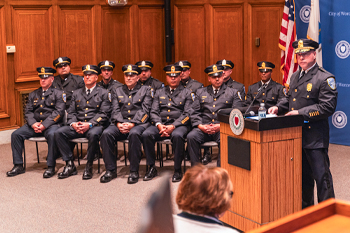
Effective March 1, 2025, an African American temporary Deputy Chief was promoted to a permanent Deputy Chief position. On March 21, 2025 a Hispanic temporary Captain was promoted to a permanent Captain. Both aforementioned positions are historical firsts in Worcester for those positions. Subsequently:
- A Hispanic sergeant was promoted to Lieutenant, and an African American police officer was promoted to sergeant on April 20, 2025.
- An African American police officer was promoted to sergeant on Oct. 12, 2025.
- A female police officer was promoted to sergeant on Oct. 19, 2025.
All ranks now have a degree of diversification, and efforts are continuously being made to increase the numbers.
By removing the Chief and Deputy Chief positions from the Civil Service process, the City Manager may select from a more diverse pool of candidates.
Current police official (those above the rank of officer), demographics as of Oct. 22, 2025:
- 6 Hispanic
- 5 African American
- 82 White
- 4 Female
- 89 Male
Recommendation 8.1: The City, in consultation with WPD stakeholders, should consider removal from the Massachusetts civil service system, enabling the department to tailor its hiring and promotion policies more effectively in order to advance equity and diversity.
Actions
Legislation took effect March 1, 2025 that enabled the municipality to remove the positions of Deputy Chief and Chief from Civil Service. The City Manager now has the authority to appoint a Chief and Deputy Chief of his discretion.
Outcome
The City Manager appointed the Interim Chief to permanent Chief and the temporary Deputy Chief to a permanent Deputy Chief.
Recommendation 8.2: The City, in consultation with WPD stakeholders, should consider revising promotions criteria to give additional weight to experience and other valued characteristics.
Actions
The Civil Service administration has just changed several rules, including awarding more credit to experience on the job. In turn, this aids officers with more experience to score higher.
Outcome
With this change the department is still analyzing the outcome to see if there has been an impact. Although the WPD has seen a wider array of officers receive promotions as a result of the changes.
Recommendation 9.1: The WPD should enhance its ability to gather data that identifies racial or ethnic disparities in such areas as use of force, traffic stops, pedestrian stops and field contacts.
Actions
Use of Force Data
Due to the age of the WPD's Computer-Aided Dispatch (CAD) Records Management System (RMS) system, extracting information by specific parameters is often not possible. The system is 30 years old and cannot disaggregate information; everything must be done manually.
The WPD recently contracted with a company, Hexagon, that will allow the department to collect and track more information that can be disaggregated. Once contracts are completed the turnaround time for full implementation could be 18 months.
Traffic Stop Data
Massachusetts Uniform Citations, motor vehicle moving violation tickets, are created by the State of Massachusetts. The area or box on the citation where you enter the operator's information is filled in by the officer using the operator's driver's license. The information from the data boxes was entered into the RMS, but it was not possible to disaggregate the data from the system due to its capabilities. Note: The information that the department does gather related to race is not always accurate since officers will not ask an operator what race they are. Race information is not listed on the operator's license.
The department now tickets electronically. This data is transmitted directly to the Registry of Motor Vehicles. The information sent to the RMV can be requested from them. The WPD won't have hard copies for 90% of our citations and the state system and the current RMS do not communicate. The department's new RMS/CAD is expected to interface better with the state system and the state is also working on its capabilities for communities to pull better data reports.
Currently, pedestrian and field stops are not documented.
Outcome
The WPD is currently discussing ways to collect this data in an Excel Spreadsheet, which may serve as a solution until the new RMS is implemented. Hexagon allows for the needed data collection and ability to disaggregate the information. E-citations have been implemented, which allows for data to be obtained through the state. This method now allows officers to pull data more readily on sex, race, age, and residency.
Recommendation 9.2: The WPD should make these data publicly accessible.
Actions
The WPD has made the Use of Force Incident Data Points available online along with this Equity Audit Dashboard. A timeline relative to the Department of Justice's investigation into the department has also been published.
Outcome
Increased transparency for the public.
Recommendation 10.1: Create a robust data collection system to inform the development of a plan aimed at addressing disparities in arrests within Black and Hispanic communities.
Actions
The WPD has recently contracted with a company, Hexagon, that will allow us to collect and track more information that can be disaggregated. Once contracts are completed the turnaround time for full implementation could be 18 months.
Outcome
While awaiting the Hexagon system, WPD leadership can evaluate data available such as e-citation statistics.
Recommendation 11.1: The department should collaborate with local stakeholders to establish new arrest-diversion strategies for youths.
Actions
The WPD's Policy on Juvenile Arrest reflects the philosophy that an arrest is the last option. Before this last option is chosen, officers' discretion includes collaborating with the parents, schools, and businesses on ways to avoid arrest. The WPD is having ongoing discussions with the Governance Council on Children, Youth, and Families, which helps provide strategies and recommendations on systemic barriers that these communities face.
Outcome
With these collaborations, the WPD is creating recommendations to give to the District Attorney's Office.
Recommendation 11.2: The WPD should amend its policy to reflect the adoption of effective diversion strategies and alternatives to arrest.
Actions
The WPD is exploring the opportunities to expand the policy to include options that avoid arrest such as collaborating with parents, schools, and businesses.
Outcome
This will result in a revised policy that reflects our strategies prior to that arrest.
Recommendation 12.1: The WPD should review this policy and discuss potential revisions that would address privacy concerns associated with juvenile arrests.
Actions
A review of the Juvenile Arrest Policy was performed by the Policy Review Committee in 2024
Outcome
The juvenile policy was recently updated and meets all state mandates and privacy laws.
Recommendation 13.1: The WPD should consider expanding its efforts to share policies with the public by posting draft policies on its website for public comment.
Actions
Currently when it comes to drafting policies, the HRC is involved in reviewing them and making recommendations. The HRC is made up of City of Worcester civilians that volunteer their time. In addition, the WPD has two platforms that the public can utilize: the department reviews residents' comments both on the municipal website and sent to the Department's Policy review committee email WPDpolicyreviewcommittee@worcesterma.gov.
Outcome
This has allowed for public input to be incorporated into WPD policies and ensure they reflect the community's needs.
Recommendation 14.1: The WPD should create a plan to expand CIT training to all of its officers.
Actions
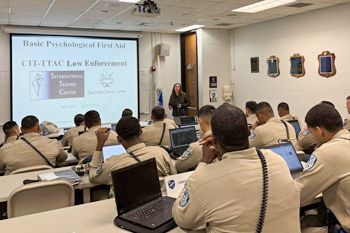
The Municipal Police Training Committee (MPTC) mandates our training curriculum. At the academy level, all officers receive 12 hours of instructions in "integrated response to individuals in crisis."
The WPD goes beyond the mandatory training hours and offers additional training to officers after the academy. The department has approximately 30 officers that have taken "Mental Health First Aid," which is an eight-hour refresher course. Additionally, approximately 91 officers have taken a 40-hour advanced CIT training. The Department of Mental Health (DMH) and the CIT model prefers that the full 40-hour Crisis Intervention Team training be provided to only interested and experienced police officers (some say five years). That way the officer has a better idea of what they are signing up for based on their experience in responding to CIT related calls, and the department approving the training has an idea of the disposition and skillset of the officer. CIT training should be reserved for those with an interest and with the right mindset—DMH frowns on training everyone for the full 40-hour class. The WPD has a full time CIT unit who manages all the training and communicates department wide to ensure mandatory and voluntary training options are offered and fulfilled.
Outcome
Expanded 12-hours of CIT focused training to 40 hours in the 2025 Academy Class and future classes. The WPD currently have 91 officers CIT certified. The Chief has also added an additional 20 hours of clinician coverage on patrol weekly totaling 60 hours.
Recommendation 14.2: The WPD should integrate community feedback into the expansion of its crisis intervention training curriculum.
Actions
The WPD welcomes community input in CIT Training, and the established identified training is developed by groups and institutions outside the department. These outside institutions are more than welcome to receive and utilize feedback from the community. The 40-hour CIT training and the eight-hour Mental Health First Aid classes are conducted locally by Open Sky Community Services, a local mental health care provider. The training is funded under a grant from DMH and is open to police departments throughout the area. Our CIT unit works daily with outside organizations and has a part-time civilian clinician that works in concert with our CIT officers. This clinician brings experiences from their educational and professional career, integrating best practices when dealing with the community.
Outcome
The CIT is authorized for officers when personnel numbers allow for full staffing of the shift. Input is currently gathered through City Council, Human Rights Commission, Standing Committee on Public Safety, Worcester Clergy Alliance, and the Chief's Advisory Committee is still being established. The WPD is exploring a formalized process to receive feedback regarding CIT curriculum.
Recommendation 15.1: The WPD should collaborate with staff to enhance and expand scenario-based exercises.
Actions
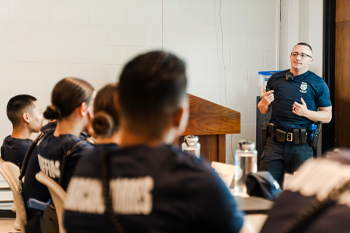
The WPD leadership team, WPD DEI unit, and EODEI collaborated to expand scenario-based examples in the DEI curriculum to teach new student officers in the academy. These scenario-based examples focused on culturally-based issues that address the community's needs.
Outcome
The student officers were required to create a presentation communicating their personal action plan. These action plans identified community needs that they would commit to supporting as officers. Student officers demonstrated their understanding and steps they would take to address cultural-based scenarios that have impacted communities.
Recommendation 15.2: The WPD should involve a diverse range of community members in the scenario-based training sessions.
Actions
For Academy Class 1-25, the EODEI and the WPD DEI team invited 16 speakers who represented diverse communities, CBO, and youth to impart their point of view on issues that involve the police.
Outcome
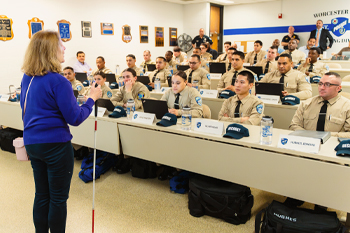
Student Officers are meeting with community stakeholders to build a relationship prior to becoming officers. In addition, they are learning about the needs of marginalized communities to better support their community policing efforts. The student officers met with the following speakers:
- City Manager Eric Batista
- Mayor Joseph Petty
- District 4 City Councilor and University Park Campus School Assistant Principal Luis Ojeda
- Al Green, Ministry Director, LGBTQIA+ Asylum Task Force
- Fred Taylor. President. Worcester Branch of the National Association for the Advancement of Colored People
- Ellen Shemitz, Chair, Human Rights Commission
- Liz Myska, Vice Chairperson, Accessibility Advisory Commission
- Evis Terpollari, Homeless Project Manager, City of Worcester Department of Health & Human Services
- Deb Hall, Chief Executive Officer, YWCA
- City Councilor Moe Bergman
- Liz Hamilton, Chief Executive Officer, Worcester Boys & Girls Club
- Carla Norris and Linford Cunningham, Directors, AIDS Project Worcester
- Celia Blue, President & CEO, Massachusetts Women of Color Coalition
- Brenda Jenkins, Health & Wellness Coordinator, YMCA
- Tuyet Tran, Executive Director, Southeast Asian Coalition
- Principal Jerry Creamer and Dean of Students Daniel Walker, Worcester Public Schools.
Recommendation 16.1: The WPD should continue to revamp its field-training program using nationally recognized self-evaluation approaches and formalize the program in WPD policy.
Actions
The Training Division has evaluated its current Field Training Program (FTP) and in turn has begun to formalize the program by creating a draft policy. In Dec. 2024, a workflow was performed on the draft policy, and recommendations are being worked into the final policy.
Outcome
A Field Training Program Policy has been authored and published.
Recommendation 17.1: The WPD should conduct a comprehensive review of its officer wellness support and develop a plan to expand the availability of support services for its rank and file.
Actions
The department is continuing a review of its officer wellness support, which includes peer support, health and wellness, and policies that involve officer wellness. The Policy Review Committee is presently reviewing Policy 501 Officer Involved Shootings, In Custody Deaths and Serious Uses of Force. The Policy Review Committee has researched best practices from other police departments and how these events psychologically affect officers. Part of the department's current officer wellness support includes a dedicated Stress Unit and a devoted Peer Counseling Team, both of which are available to any employee 24/7. Both entities work collaboratively and independently to offer a host of resources. All department personnel, especially supervisors, are responsible for monitoring all incidents and reporting any potential traumatic exposures to their commander, who is responsible for notifying the Stress Unit and/or Peer Counselors. Immediately after any notification, contact is made with involved officers.
Part of the officer's wellness is health-focused. With that in mind, the department has revamped its gym through donated funds from the WPD employees. The department will seek to receive funds from the municipality for these expenses in the future. This affords all employees the opportunity to exercise twice a week during their tour of duty to assist them in maintaining their physical and mental health.
Additionally, the City of Worcester has an Employee Assistance Program which offers a variety of wellness support such as counseling, peer support, and coaching.
Outcome
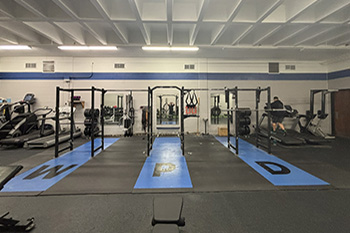
This review has created a better focus on health and wellness. A revamped gym provides current needs for maintaining health. Updates to the current Pol. 501 have been drafted and entered into a workflow.
Recommendation 18.1: The NRT, in collaboration with other WPD members, should develop a formal plan for improving community engagement for the department.
Actions
The WPD's community engagement policy is outlined in Policy 02 Organizational Structure through its Community Policing initiative and collaboration with CompStat. The policy is being slated for review and updated from "Community Impact Division" to "Neighborhood Response Team" (NRT). Parts of the formal plan will include documented Community Engagement Patrols. During these currently implemented community engagement patrols, officers walk their areas of responsibility in pairs or solo. The objective is to engage community members in a positive way. Another part of the plan is to have sector sergeants and route officers attend NRT community meetings to meet and greet with the community members in their area.
Outcome
A larger volume of officers becoming ombudsmen in their community of responsibility.
Recommendation 19.1: To strengthen its engagement with at-risk youth, the WPD should develop a plan to strategically expand initiatives and partnerships that are aimed at achieving this goal.
Actions

In collaboration with the Worcester Division of Youth Opportunities and Worcester Youth Violence Prevention Initiative, the Worcester Police Department Gang Unit has Youth-Engagement Programs (operated through Grants which delineate the plans/guidelines in signed agreements).
Program Mission and Goals
The WPD Gang Unit provides a variety of programs to engage with at-risk youths to develop trust between the youths and the police, foster empathy between the youths, and encourage the development of their self-esteem at a critical time in their overall development. The programs aim to show the youth the many options and opportunities they have in life and the many paths to being successful, while engaging them in activities that are of interest to them and leveraging their natural skills and talents.
Each program offers multiple methods of engagement, and although each program has a different structure, there are overarching tangible goals:
- Bring youths from different neighborhoods together to get to know each other, develop empathy for one another, and get along with one another,
- Provide mentors to inspire the youths, encourage them to set high goals and standards for themselves and others, and help them feel valued/seen– these mentors include police officers as well as other professionals such as fire fighters and professional athletes,
- Instill self confidence in the youth by allowing them the opportunity to practice the skills and develop the tools needed to be self-empowered,
- Stress the importance of education-whether it is through academics, trades, or the military, and,
- Encourage the development of self-respect, including being a good team player-win or lose.
Guiding Principles
The following are imperative to each program as it is developed and carried out:
- Each program provides a safe environment for all youth-both physically and mentally,
- All youth should feel that they can come as they are and be their true self at these programs,
- All programs are welcoming and inviting to all; for example, you do not need to be a great basketball player to play in the P.A.L. Basketball League, and,
- All program participants (youth and adult) are treated with mutual respect.
Active Youth-Engagement Programs
The WPD Gang Unit provides a diverse slate of programming to reach youths of varying ages and interests. The unit recognizes there are many different ways of learning, and in order to achieve the program goals, strives to meet youths where they are. These programs are:
- P.A.L. Basketball,
- G.A.N.G. Summer Camp,
- Informal mentoring opportunities (i.e. outings to sporting events), and,
- An Annual partnership with Worcester Public Schools that include conversations with 6th grade students that discuss gangs, youth violence and gun safety.
Outcome
Having these plans in place delineated within the grants allowed the WPD to have outreach with approximately 420 youths. Each program provides a safe environment for all youth-both physically and mentally.
Recommendation 20.1: The WPD should elevate the roles of diversity and LGBTQ officers to develop a plan to lead comprehensive diversity and inclusion initiatives across the department.
Actions
Officer Jesse Bonardi was Newly Appointed as the LGBTQ+ Liaison Officer by Chief Saucier and DEI Officer Sgt. Angel Miranda. The diversity officers are assigned to the Chief's office to allow for first-hand collaboration with the Chief. In partnership with the EODEI, the LGBTQ+ Liaison took the lead in creating the curriculum segment on the LGBTQ+ community to teach in our DEI academy for the class of 2025. The LGBTQ+ Liaison coordinated with LGBTQ+ community stakeholders to participate in the DEI academy class to educate officers on how to best support the LGBTQ+ community through community policing. A comprehensive diversity and inclusion plan is still being developed in collaboration with the municipality's Chief Equity Officer Kevin Lovaincy.
Part of the plan is to have implicit and explicit bias training, which has already been started. Another part the plan incorporates Sexual Harassment training, which has also taken place. Officers are encouraged to provide their feedback following all trainings. The DEI officers allow for confidential conversations to be had and have an open-door policy.
Ofc. Bonardi will work closely with the LGBTQ+ community, Human Rights Director Patricia LaFore, Sgt. Miranda, and Ofc. Onuigbo regarding community concerns, future training opportunities, and LGBTQ+ events in the community.
Outcome
Annual Bias training has been established. Ofc. Bonardi has been added to the DEI team to expand its rolls to better include the LGBTQ+ community. He has established a curriculum in the DEI academy that reflects the LGBTQ+ community. The class of 2025 student officers were required to create Personal Action Plans (PAP) that will reflect their commitment to communities they are not familiar with. Many chose the LGBTQ+ community to support and have outlined action steps on how to support them. The class of 2025 graduates were awarded with DEI completion certificates.
Recommendation 21.1: The WPD should expand the involvement in community engagement activities and events to all officers.
Actions
Discussions are underway to accomplish this recommendation. There are many officers that have assignments that utilize specialized skills that require them to be performed to areas strictly located at the police department (e.g. Cell room officers, Service Division officers, Real Time Crime Center officers). One form of bringing the community engagement to the officers assigned at the station would be department tours. During this time the community could engage with the officers regarding their assignments and how it affects the community. This recommendation would not be possible unless a large number of officers were added to the complement that would allow these specialized units down time to participate in community engagements.
The WPD implemented community engagement patrols within the Patrol Division where officers walk their areas of responsibility in pairs or solo. The objective is to engage community members in a positive way. These patrols are also documented. Additionally, sector sergeants and route officers are now required to go to NRT community meetings to meet and greet the community members in their area.
Outcome
These community engagement patrols have led to increased opportunities for engagement with the public. During these assignments officers are able to bring feedback to the department from the community.
Recommendation 22.1: The WPD should build upon its existing social media presence while also incorporating content that highlights its commitment to creating an inclusive department and community.
Actions
The WPD has recently hired a communications specialist who is proficient in making short videos, which the department believes is a superior medium to share information about our community policing efforts. The WPD has begun expanding our social media presence by making recruitment videos, which should assist our DEI/recruitment officers in their efforts to recruit qualified, diverse candidates to be Worcester Police Officers. The Police website has been recently updated to make it more accessible and user friendly. The content on the website aims at providing diverse materials and representation.
Outcome
The communications specialist has worked closely with the department's DEI officers, which has resulted in posting pictures of community events and other content. In addition, they have collaborated on several recruitment videos. A combination of these efforts and others have led to the current WPD Police Academy class, which is the most diverse in the department's history.
Recommendation 23.1: The WPD should consider amending its social media policy and providing additional training, within the confines outlined in the constitution, to offer guidance for department review of off-duty use of social media.
Actions
The WPD consulted with the City of Worcester Law Department, and several constitutional issues were discussed concerning people's private Facebook pages. All WPD officers are required to abide by all Policies & Procedures and Rules & Regulations governing behavior. This encompasses conduct unbecoming of an officer and discourtesy. Conduct unbecoming an officer is defined as conducting oneself, on or off duty, in a manner which reflects discredit upon the officer or employee as a police officer or employee, or upon his fellow officers or employees, or upon the Police Department or any conduct or act which interferes with the operation, efficiency, or discipline of the Department. Discourtesy is defined as being rude or insolent to any member of the public or any other officer or employee of the Department. Officers and employees shall not use profane or abusive language or actions while in the performance of their official duties. Officers and employees shall be courteous to the public and their colleagues. They shall be tactful in the performance of their duties and shall control their tempers, exercising the utmost patience and discretion even in the face of extreme provocation.
Outcome
The Law Department cited First Amendment rights issues with regulating WPD members' personal social media. The department will continue to investigate any reported conduct unbecoming an officer and discourteousness associated with their social media. Additional avenues for public concerns can be made through EODEI's Investigations Division.
Recommendation 24.1: The WPD should expand its fair and impartial and community oriented policing training curriculum for all officers in collaboration with the community.
Actions
The WPD is working on adding training to address community policing principles, collaborative problem-solving, and fostering stronger community partnerships. The collaboration with the community plan is still being explored. Some ideas include using the community in role playing exercises to gain feedback from them after the training. In addition, with the added DEI academy segment, the curriculum focuses on community policing through a DEI lens. In collaboration with community stakeholders, they played a role in the curriculum and presenting to the officers.
Outcome
The Training Division is still creating an outline to address this recommendation. Student Officers are meeting with community stakeholders to build a relationship prior to becoming officers. In addition, they are learning about the needs of marginalized communities to better support their community policing efforts. The student officers met with several speakers from various communities (for a full list see Recommendation 15.2 above).
Recommendation 24.2: The WPD should explore innovative approaches to improving supervision activities and training programs that effectively identify inappropriate behaviors and areas for enhancement.
Actions
The WPD currently utilizes an Early Intervention Screening system that monitors certain incidents such as complaints and other noted events such as uses of force. It will alert the Bureau of Professional Standards if a predetermined criterion is met. The incidents are then reviewed to determine if intervention is needed. The WPD is also purchasing a new records management system (Hexagon) and professional standards software from PowerDMS. This software is capable of interfacing, which will allow better data tracking. Being able to follow this data will allow the WPD to scan for patterns of inappropriate behaviors and for areas of enhancement. One improved supervision activity recently added requires an official to review the use force incident. This entails reviewing the report, Body-Worn Camera (BWC) footage, and any other necessary evidence. This review is then documented in the records management system. The official is also required to respond to the scene if there is an injury.
Outcome
A more in-depth review of all uses of force is performed through this procedure. The WPD is awaiting the purchase of this innovative software pending budget approval.
Recommendation 25.1: The City and the WPD should establish a CAC at the commander level to address specific local issues in the community.
Actions
Chief Saucier along with DEI officers are in the process of creating a Chief's Advisory Committee (CAC). The CAC will provide a medium where community members can function as a resource for the Chief in the development of strategies that reflect the community's ideals. The CAC will consist of a diverse group of individuals that represent various social backgrounds within the City of Worcester, including various representatives from different backgrounds.
Outcome
WPD is working toward having a full CAC membership body by the end of summer 2025.
Recommendation 25.2: The WPD should ensure that the selection process is transparent and completed by an outside party.
Actions
The Chief of Police is still evaluating the selection of the CAC. Part of the planning process for this committee involved creating guidelines for it to abide by. A policy/guideline is being drafted toward this initiative and will encompass the selection process, procedures, and transparency.
Outcome
The department is drafting a policy to guide the CAC.
Recommendation 26.1: The WPD should continue efforts toward conducting a thorough community review of its BWC policy and program that includes community stakeholders. It should also establish a structured framework for conducting mandatory annual assessments of the BWC program.
Actions
The WPD has established the Policy Review Committee. The committee has a public email address that residents can contact to voice their input on the department's BWC policy. The Human Rights Commission is another avenue that can be utilized to review the BWC program. In addition, the WPD plans on delivering an annual report on the state of the BWC program every year going forward. This report will be shared with the municipal administration, the City Council, and the community. This policy is also subject to public scrutiny through the City Council, Public Safety Committee, and the Human Rights Commission. The Chief of Police is working on a structured framework for conducting mandatory annual assessments. The annual report will provide some insight on what the framework would include.
Outcome
An annual review and completed report for the BWC program. The Annual Review will be performed in February of each year.
Recommendation 27.1: The WPD should create new opportunities to involve communities collaboratively through its community meetings.
Actions
Sector sergeants and route officers are now required to go to NRT community meetings to meet and greet with the community members in their area.
Outcome
A discussion on new opportunities to engage with community stakeholders will be held at the meetings.
Recommendation 28.1: The WPD should commit to improving language translation services to enhance communication with all immigrant groups residing in Worcester.
Actions
The Limited English Proficiency Policy 806 has been updated and implemented throughout the department following a review by the Human Rights Commission. The WPD is now using LanguageLine Solutions on a daily basis. The Director of Human Rights & Accessibility, Patricia LaFore, worked closely with the Chief and the department's DEI team to develop a strategic LanguageLine plan for the department. The department has dedicated phone lines with the language application installed to facilitate communication. WPD is currently running a pilot program with Axon through its Body Worn Cameras that utilizes a translation platform that can recognize over 50 languages. The pilot is running from Aug. 22 - Oct 22, 2025.
Outcome
24 hour service for language translation. See LanguageLine Data from June 2024 - May 2025.
Recommendation 28.2: The WPD should collaborate with the City's DEI office to review and revise the existing cultural sensitivity training to reflect current issues.
Actions
The Department has collaborated and partnered with Chief Equity Officer Kevin Lovaincy regarding Community Policing through the DEI lens, which resulted in an approved curriculum delivered to Class of 2025 student officers. This is the first class to receive DEI training through the Chief Equity Officer as a requirement. The WPD is exploring ways to add additional curriculum to the MPTC's mandated courses for certified officers. Furthermore, the Chief Equity Officer is collaborating with the Training Division to review and update existing cultural sensitivity training in the department.
Outcome
This has resulted in a curriculum of approximately 18 hours taught to all the current and future recruits. The Curriculum and Syllabus touches on cultural diversity, specifically utilizing community policing with a DEI lens. The curriculum is set to address strengthening community relationships and recommendations from this audit. The Class of 2025 recently completed the DEI academy and were awarded certificates of completion.
Recommendation 29.1: The WPD should update its use-of-force database to add additional fields, capturing demographic data about the involved community member (age, sex and race), a unique identifier (e.g., name) for each involved community member, and additional details about the incident (as described above).
Actions
The current RMS is not able to disaggregate this information. A new RMS system has been contracted out with Hexagon. All use of force data is available to the public on Informing Worcester. At this time every use of force incident would have to be reviewed manually to capture this information. Currently it would take additional personnel to record this data in a presentable format.
Outcome
The purchase and implementation of Hexagon is in process, and there is an expected 18-month completion timeline.
Recommendation 30.1: The WPD should enhance its data-reporting processes to identify potential disparities and follow up with any necessary policy or training needs.
Actions
The WPD's CAD RMS system is 30 years old and cannot disaggregate information; everything must be done manually. The new Hexagon RMS, which is slated to be implemented within the next 18 months, should assist with this. BOPS completes an annual report that now includes the race of the officer and suspect in each use of force complaint. Furthermore, the department recently implemented e-citations that are regulated by the state.
Outcome
Purchase and implementation of RMS Hexagon and Professional Standards software PowerDMS (pending budget approval). These will allow WPD to better gather and report this data.
Recommendation 31.1: The WPD should report racial demographic information online.
Actions
Use of force data including this information will be online when the RMS system is updated. Currently, all use of force data is available to the public on Informing Worcester.
Outcome
Purchase and implementation of RMS Hexagon. This will allow WPD to glean requested data.
Recommendation 32.1: The WPD should engage in formal conversations with the City of Worcester to discuss the establishment of a civilian oversight body.
Actions
The City Manager and City Council have had some discussion regarding a civilian oversight body. Following discussions with the Worcester Regional Research Bureau (WRRB), the WRRB informed the Administration that it will take the lead on performing an independent review and compiling a research report on Civilian Review Boards.
Outcome
Currently, all complaints and resulting investigations are forwarded to the Massachusetts Peace Officer Standards and Training (POST) Commission, which is an outside entity, for their review.
Recommendation 33.1: The BOPS should expand on the data that it collects related to racial disparities, enabling it to conduct more extensive analyses.
Actions
In 2023, the WPD started collecting race demographics of both the officer and the complainant. The department reviews these stats to check for any disparities. This BOPS Report presents the race of the officer (names redacted) in the second column. An analysis of the demographics did not present any bias patterns within this data sheet.
New software such as IA Pro, Benchmark Analytics, or PowerDMS would better serve this purpose to store and produce analytical data. The department is currently looking for new software.
Outcome
Demographic information for both the officer and complainant is included in the BOPS annual report. New Professional Standards software has been requested in the upcoming fiscal budget. This software will aid the WPD in expanding the data collected to conduct more extensive analyses.
Recommendation 34.1: To enhance transparency, the WPD should incorporate the review of BWC footage into its formal policy and process for reviewing and resolving complaints.
Actions
BOPS will allow complainants to view BWC footage after being interviewed so perception is not tainted. BWC footage is also available to any requestor through a public records request. A BOPS policy review is being conducted to include adding a portion that discusses the complainant's access to the BWC footage.
Outcome
This has always been the practice since the BWC's were instituted. Guidelines regarding BWC footage will be added to the policy.
Contact Information
Address
Diversity, Equity and Inclusion
51 Sever Street
Worcester, MA 01609
Contact
Phone: 508-799-1995
EODEI@worcesterma.gov
Hours
Monday - Friday
8:30 a.m. - 5 p.m.